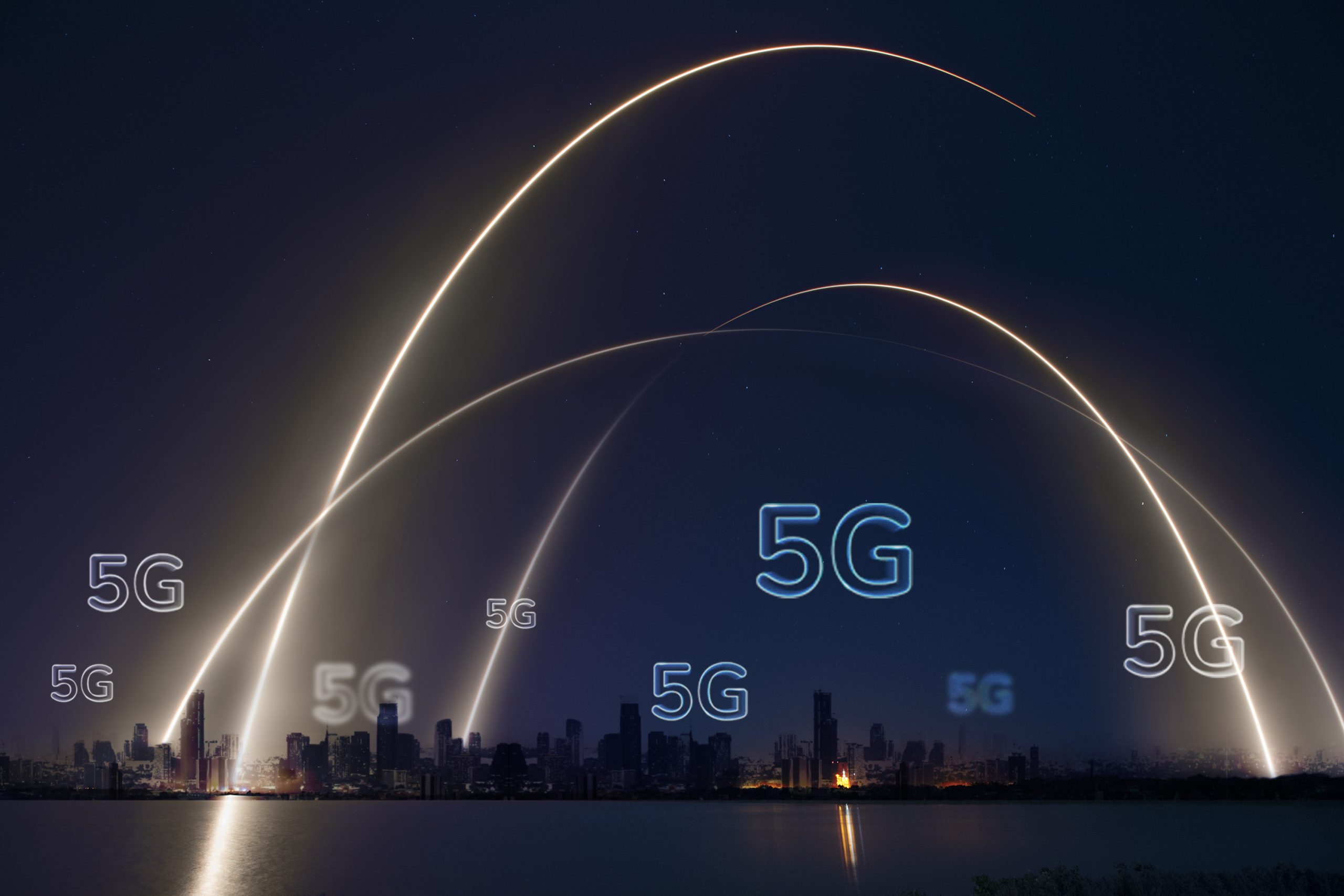
5G is the most demanding fifth generation of cellular technology. It aims to lower latency and improve the speed & flexibility of wireless solutions.
Facts about 5G!
- The maximum speed of 5G technology is 20 Gbps, compared to only 1 Gbps for 4G technology.
- 5G promises reduced latency, which might enhance the functionality of various digital applications which include, but are not limited to online gaming, videoconferencing, self-driving cars, and a wide range of business applications.
- While 4G LTE and other previous generations of cellular technology just focused on maintaining connectivity, 5G takes connectivity to the next level by offering customers more connected experiences through the cloud.
- When combined with cloud technologies, 5G networks offer software-driven and virtualized solutions.
- The 5G network will make mobility easier by enabling smooth roaming between Wi-Fi and cellular connectivity. Mobile users can seamlessly utilize wireless networks within homes and outdoor networks without the need for user intervention.
Also Read: Application of Wireless Sensor Network and Its Components in IoT
How 5G Networking Technology Works?
5G technology is expected to bring more advancements throughout the network architecture. Spectrums that were not used for 4G will be covered by 5G New Radio, the international standard for a more powerful 5G wireless air interface.
Massive MIMO (multiple input, multiple output) technology, which allows multiple transmitters and receivers to carry more data at the same time, is now included in new antennas. However, 5G technology is not just limited to the new radio frequency. This leads users to have access to more bandwidth.
Software-defined platforms, or 5G architectures, control networking functions through software. Virtualization, cloud computing, IT, and business process automation allow 5G architecture to be flexible and agile. This allows users to access the network anytime and anywhere.
Besides this, 5G improves digital experiences by automating tasks with machine learning (ML) capabilities. 5G networks when combined with automation, machine learning (ML), and artificial intelligence (AI), make it possible to meet the expectations of reduced response times up to a few nanoseconds. 5G technology has brought a new era of faster and more efficient networks as well as new connected experiences for users.
Impact of 5G on Health and Automobile Sector
5G technology and Wi-Fi 6 connectivity in the healthcare industry will make it possible to monitor patients through linked devices that continuously provide data on important health measuring devices for blood pressure and heart rate.
In the automotive sector, 5G with ML-driven algorithms will offer data on traffic, accidents, and other aspects. Cars will also be able to exchange data with other cars and roadside entities, such as traffic signals. These are just two examples of how 5G technology is being used in the business to provide users with safer and better experiences.
What’s More to be Expected?
These are just a few impacts of 5G in the future. Researchers and businesses already have set higher expectations with 5G for record-breaking speeds and ultra-low latency. If 5G can solve the other challenges and ensure the easy collaboration of systems, ultra-fast 5G technology will be seen in the coming 5 years.